
×

Hajj is the sacred pilgrimage performed by Muslims at the holy mosque of Masjid al-Haram in Makkah, Saudi Arabia. It is one of the five pillars of Islam and is obligatory for every Muslim at least once in their lifetime, provided they have the means. Hajj takes place annually during the month of Dhul Hijjah, from the 8th to the 13th.
As Muslims, undertaking Hajj is a spiritual duty if one is financially, physically, and emotionally able. The Qur’an commands:
“You will enter the Sacred Masjid, God willing, perfectly secure, and you will cut your hair or shorten it (as you fulfil the pilgrimage rituals) there. You will not have any fear. Since He knew what you did not know, He has coupled this with an immediate victory.”
– Qur’an | 48:27
The pilgrimage lasts five to six days, from the 8th to 12th or 13th of Dhul Hijjah. Eid al-Adha begins at the sighting of the new crescent moon, lasting four days. Hajj involves a series of rites and rituals, which can require walking 5–15 km per day and is both spiritually and physically demanding. It offers Muslims a chance to refresh their spiritual selves, cleanse sins, and draw closer to Allah (SWT).
Hajj occurs annually between the same dates, depending on the lunar calendar. Locations involved include:
Hajj is not meant to be a burden. Exemptions include:
The Hajj as known today was first performed in 628 CE by the Prophet Muhammad (peace be upon him), following the traditions established by Prophet Ibrahim (AS) as instructed by Allah (SWT) millennia before.
×
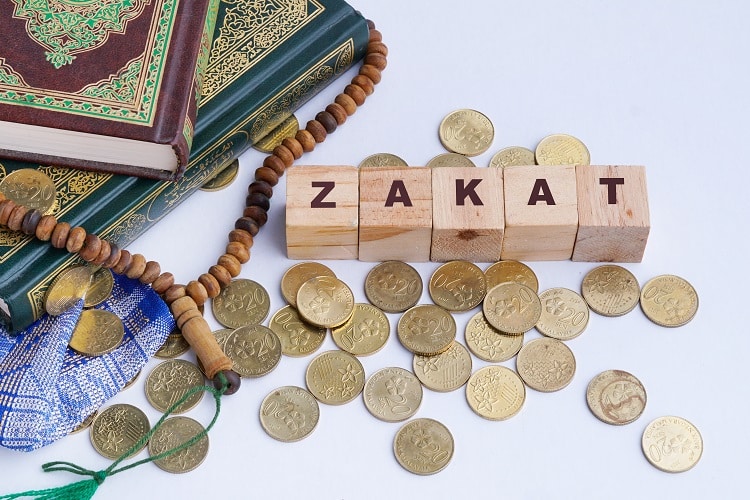
Zakat (zakaat, zakah), or almsgiving, is one of the five pillars of Islam. It is mandatory for every sane, adult Muslim who owns savings, capital, or other forms of wealth over a certain amount, known as Nisab. They must pay 2.5% of that wealth as Zakat once a lunar year has passed since reaching the Nisab.
“…and those in whose wealth there is a recognised right, for the needy and deprived.”
– Qur’an | Surah Al-Ma’arij | 70:24-25
Zakat is a revolutionary concept that can end extreme poverty. It is not just a fundamental pillar but also a powerful means to support the needy and deprived.
“And be steadfast in prayer and give Zakat: And whatever good you send forth for your souls before you, you shall find it with Allah.”
[Qur’an | Surah Al-Baqarah | 2:110]
The compulsory value is 2.5% of your total Zakat-eligible wealth. For example, if your total assets (after any debts) amount to R10,000, you would pay R250.
Zakat is calculated on wealth, assets, and possessions over a lunar year, including gold, silver, cash, savings, and business assets, rather than on income.
×
Saum is the Arabic term for fasting. Muslims are required to fast once they attain puberty, during the month of Ramadan. This involves abstaining from food, drink, sexual relations, and displeasing speech and behavior from dawn until dusk.
Ramadan is the ninth month of the Islamic calendar and includes the night in which the Qur’an was first revealed to mankind, known as Laylat al-Qadr (the night of decree). It is a sacred month requiring devotion, reflection, and worship. Muslims who cannot fast due to illness or travel can make up for the lost days later.
“God wants ease for you, not hardship. He wants you to complete the prescribed period and to glorify Him for having guided you, so that you may be thankful.”
– Qur’an | 2:185
During this sacred time, Muslims abstain from their needs and desires, gaining control over distractions and focusing on worship. Keeping Saum for Allah alone is a special act of devotion, with a unique reward.
“All the actions of the children of Adam are for them except fasting; it is for Me and I alone will reward for it.”
– Hadith | Bukhari
×

Salah, also known as Prayer, is one of the five pillars of Islam and is a fundamental act of worship for Muslims. It involves praying 5 times a day at set times, and is a direct means of communication with Allah.
Muslims perform Salah as an essential part of daily life to seek guidance, forgiveness, and blessings from Allah. It involves specific physical movements and recitations while facing the Qiblah (direction of the Ka’bah in Makkah). The key is to be focused and conscious of Allah’s presence.
Salah is an integral part of a Muslim’s life. Through prayer, Muslims reflect on the Qur’an, the Shahadah (declaration of faith), and Allah’s attributes. Muslims across the world unite in prayer at five specified times each day facing the Ka’bah in Mecca, connecting to Allah and their purpose in life.
“Maintain with care the (obligatory) prayers and (in particular) the middle prayer and stand before Allah, devoutly obedient.”
– Qur’an | Surah al-Baqarah | 2:238
Salah is a ritual prayer that requires specific etiquettes to perform correctly. There are slight differences depending on the Madhab (school of thought) followed, but all four schools agree that the prayer is valid when performed according to any of them.
Eid prayer is performed in congregation on the mornings of the two Eid celebrations: Eid al-Adha and Eid al-Fitr. You can follow a step-by-step guide to praying Eid Salah for reference.
Salah times depend on the sun’s position. Authorities publish local prayer times for convenience. You can check the prayer times for your area on official websites or community sources.
×

The Shahada (shahadah) is the Arabic term for the declaration of faith in one God (Allah) and His messenger.
Transliteration: “Ash-hadu an la ilaha illa Allah, Wa ash-hadu anna Muhammadan Rasulu-Allah.”
Translation: “I bear witness that there is no God but Allah (i.e. there is none worthy of worship but Allah), and Muhammad is the Messenger of Allah.”
It is the most sacred statement in Islam, and must be recited with full understanding and mindfulness of its meaning.
The belief in one Allah is the central tenet of the Islamic faith, around which all else revolves. Muslims are reminded of this foundational belief during the five daily prayers and other pivotal moments in life. The second part acknowledges the Prophet Muhammad (peace be upon him) as Allah’s messenger, reminding Muslims to uphold the oneness of Allah.